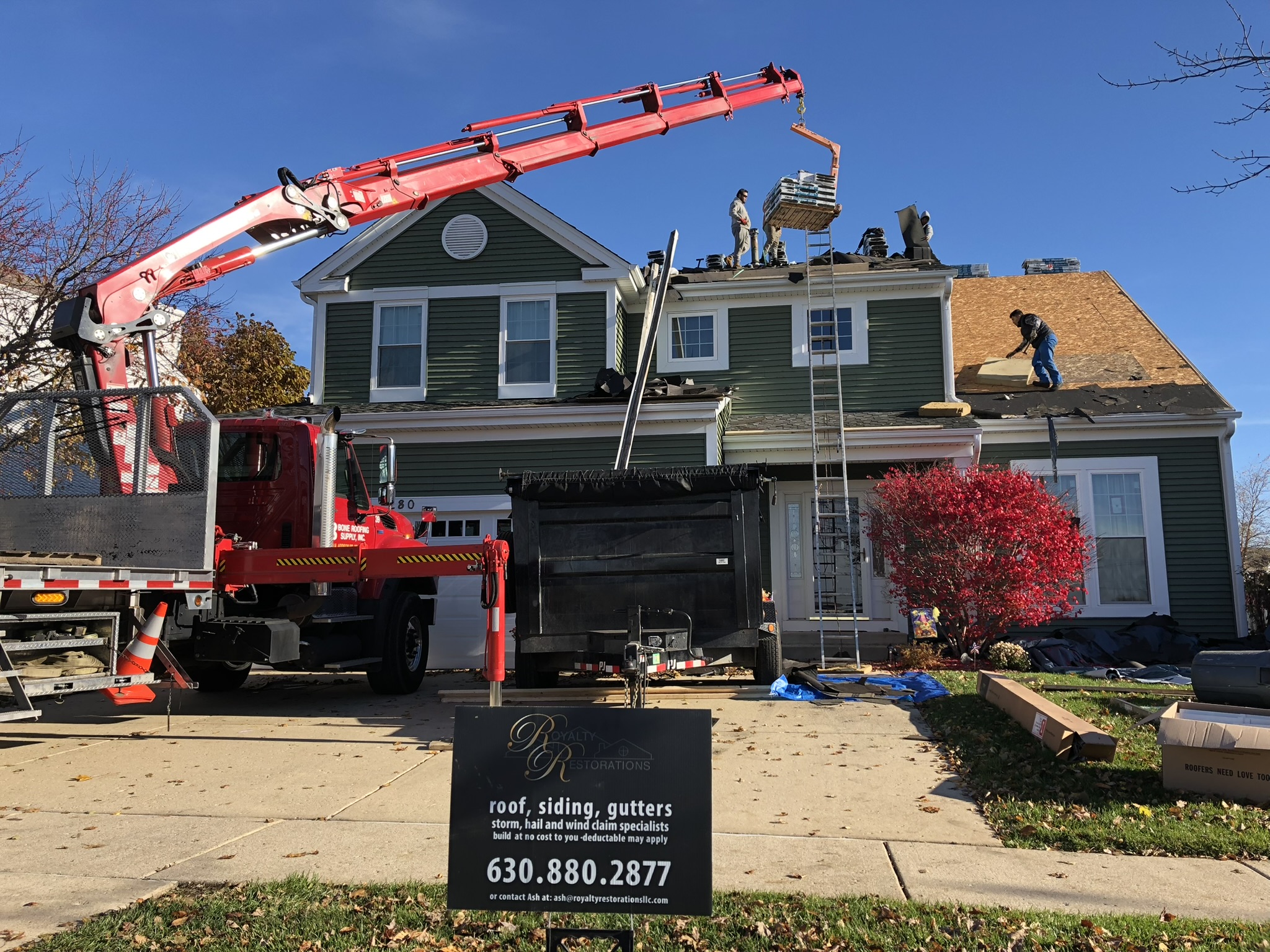
Northern Illinois weather doesn’t play gently with rooftops. Between spring hailstorms, straight-line summer winds, and heavy winter snow loads, homes across Woodstock and the greater Chicagoland area take a beating year after year. The tricky part? A lot of that damage isn’t visible from the ground — and by the time you notice a leak, the storm that caused it may be months in the rearview mirror.
If your roof has been hit, filing an insurance claim can feel intimidating. Here’s a clear, honest walkthrough of how the process actually works — and how to give yourself the best shot at a fair outcome.
First, know what storm damage looks like
Hail and wind damage aren’t always dramatic. Signs to watch for include:
- Dark or bruised spots on asphalt shingles where the protective granules have been knocked loose
- Granules collecting in gutters and downspouts (they look like coarse black sand)
- Cracked, curled, or completely missing shingles after a windstorm
- Dented gutters, flashing, or metal vents — often the first visible clue of hail
- Water stains on ceilings or in the attic, which point to a compromised roof surface
Don’t wait — most policies have a filing window
Many homeowner policies require you to report storm damage within a set period, often one year from the date of loss. The sooner you act, the easier it is to tie the damage to a specific storm event, which matters when an adjuster reviews your claim. If a major storm rolled through your neighborhood, it’s worth getting a professional inspection even if your roof looks fine from the driveway.
How the claim process works, step by step
- Get a professional inspection first. A qualified roofing contractor documents the damage with photos and a detailed report before you ever call your insurer.
- File the claim with your insurance company and receive a claim number.
- Meet the adjuster. Your insurer sends an adjuster to assess the damage. This is the single most important step — and it’s where having a knowledgeable contractor on-site with you makes a real difference.
- Review the scope and estimate. The insurer issues a scope of work and payment. If it doesn’t fully cover the damage, that figure can be discussed and re-evaluated with proper documentation.
- Complete the work with a reputable licensed contractor, and submit any final paperwork for the remaining payment.
Why homeowners bring in a roofing pro early
Insurance adjusters are thorough, but they’re assessing dozens of properties. A roofing contractor who does this every day knows exactly where storm damage hides and how to document it clearly. At Royalty Roofing & Siding, we walk homeowners through the entire claims process — meeting the adjuster on-site, providing the documentation, and making sure nothing gets overlooked. Our philosophy is quality over quantity and honest communication, so you always understand what’s happening and why.
A word of caution: be wary of any contractor who offers to “waive your deductible” or pressures you to sign before an inspection. Those are red flags. A trustworthy company earns the work by doing it right.
Storm rolled through? Get a free, no-pressure roof inspection.
We’ll assess the damage, document it properly, and guide you through your insurance claim. Call Royalty Roofing & Siding at (630) 880-2877 — proudly serving Woodstock and the greater Chicagoland area.